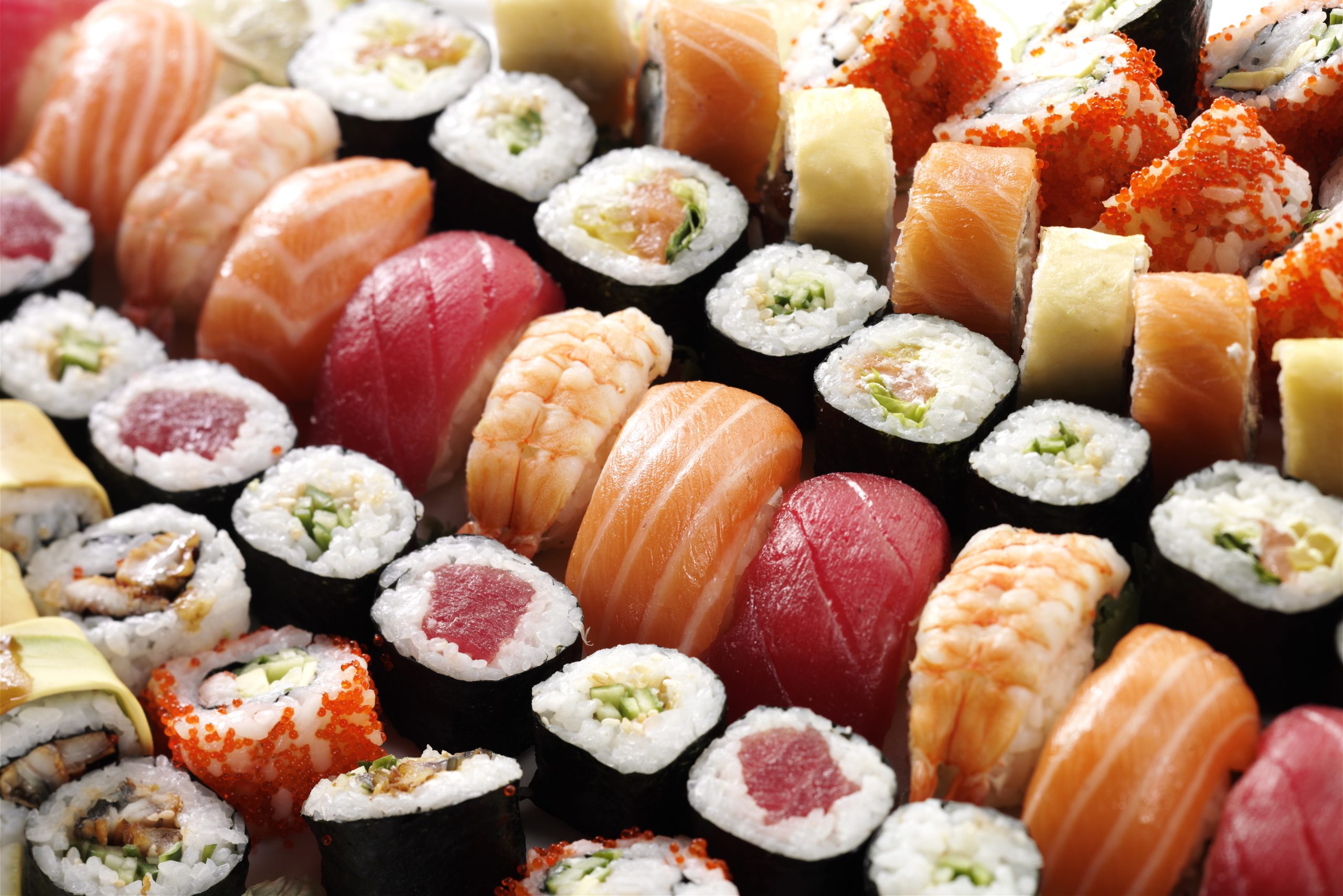
You can also check out the Glossary of terms for Seafood to say the type of sushi or sashimi you’d like. For example, you can say “ebi nigiri”, and you’ll get a ball of rice with shrimp. Or say “hamachi maki” and you’ll get a sushi roll with yellowtail in the centre. Or simply say “toro sashimi” for pieces of fatty tuna belly, on their own (with no rice).
Here are some other types of sushi:
Bara sushi: Sushi rice and ingredients mixed together, as a rice salad. Regional to Kansai.
Chirashi sushi (Iso-don, gomoku sushi): A bed of sushi rice topped with assorted ingredients.
Fukusa sushi: A type of sushi for which the rice is wrapped in a paper thin omelette. Fukusa means “silk-square sushi”. The word “fukusa” meaning silk fabric squares are often used to wrap presents or precious articles in Japan.
Funamori (Gunkan maki, kakomi sushi): Nigiri sushi wrapped to hold in less solid ingredients. “Boat wrapâ€.
Futomaki: Large roll with assorted ingredients.
Gunkan zushi: nigiri sushi, but with a piece of nori wrapped around like a cup to keep the topping from falling off. This is usually for toppings that are easily seperated or can fall off, such as fish roe or sea urchin (uni).
Inari sushi: Aburage (deep fried bean curd pouches) stuffed with sushi rice.
Maki sushi: Sushi rice pressed onto a sheet of nori, rolled up with a centre of fillings. Norimake sushi is a roll with the nori on the outside.
Nigiri sushi: A molded ball of rice topped with most often, raw or pickled fish, or sweetened omelette.
Okonomi-zushi: Home-style Nigiri sushi.
Oshizushi : Sushi rice and other ingredients pressed into a box or mold. The rice merchants of Osaka – the financial capital of Japan, developed “oshi sushi”. For pressed sushi, vinegar rice is packed into a mold and covered with marinated fish or other ingredients. When unmolded, the resulting loaf of sushi is cut into even bite-sized pieces. There tends to be a rivalry between edo-mae sushi, which is the most common with a hand molded rice ball with a topping, and this box-molded variety.
Sashimi: Sliced or prepared raw fish.
Tazuna sushi: A maki roll with diagonal strips of food across the top, often called a rainbow roll.
Temaki: Hand rolls, usually cone-shaped. Typical temaki fillers include maguro, sake, sukimi, o-shinko, natto, negi-toro, and ume-shiso.
Tekka maki: sushi roll filled with raw tuna.
Unagi maki: Eel roll.