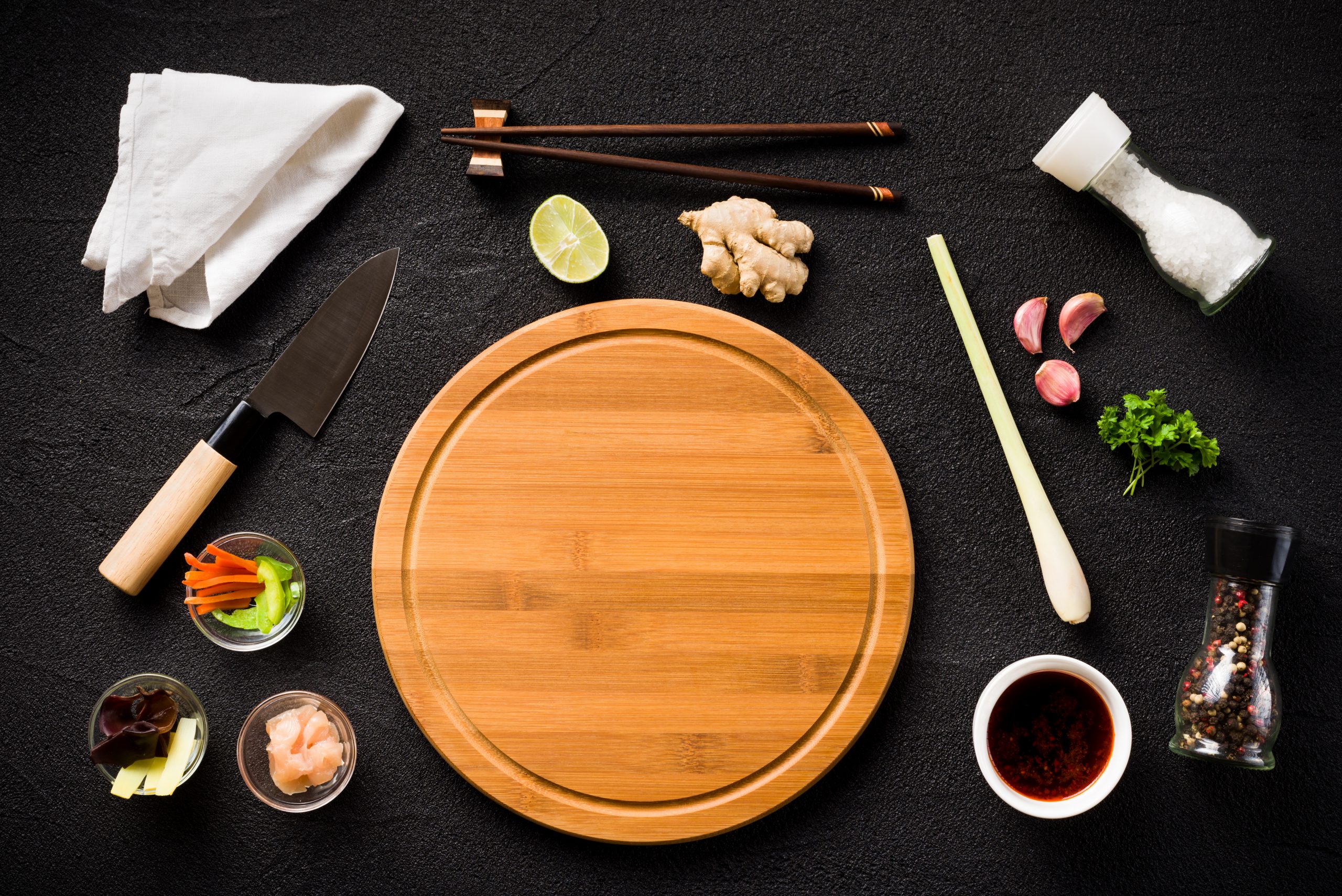
Here is a glossary of terms for cooking implements in the Japanese kitchen.
D
donabe: earthenware pot with lid. Can be used for stovetop cooking (on a gas stove) or at the dinner table using a portable stove.
F
fukin: cotton kitchen cloth or rag. A larger version of this is “daifukin”
H
hangiri: wooden sushi tub, in the shape of a large circular plate with high sides. Used to mix the rice with sugar and vinegar to make sushi rice.
hocho: knife. knives specifically for vegetables are called “nakkiri bocho” and all purpose knives are called “bunka bocho”. Other types of hocho are the following:
“deba bocho”, a heavy duty knife that has a thicker blade.
“Sashimi bocho”, a fish slicer.
K
kushi: bamboo skewers.
M
manaita: a cutting board, long enough to rest across the sink.
mushiki: steamer
O
oroshigane: a steel grater
oroshiki: porcelain grater
oshizushi no kata: wooden sushi mold
otoshibuta: a wooden drop lid that is used while simmering food, to retain moisture.
R
ryoribashi: cooking chopsticks, often longer than the ones used to eat with. Normally, ryoribashi have a string at the top to tie each chopstick together.
S
shamoji: rice paddle, made from wood or plastic, to serve rice. Nowadays, shamoji are usually made from plastic as they are much easier to clean than their wooden counterparts. Sometimes, the surface of the paddle is also bumpy, which makes cleaning even easier!
sokuseki tsukemono-ki: japanese pickling pot. The main lid is connected to an inner lid, which can be screwed down to press the vegetables and speed up the pickling process.
Suribachi: A bowl with a corrugated pattern on the inside, used as a mortar. It is glazed ceramic on the outside and unglazed on the inside, often brown and beige in colour. Necessary to grind sesame seeds into a paste.
suihanki: electric rice cooker. a must for every household, as it makes boiling rice a breeze!
Surikogi: A wooden pestle, often made from cypress wood, shaped like a big cucumber.
T
tamagoyaki-ki: a rectangular omelette pan, about 6 by 7 inches in size, used to make sweetened egg omelettes called tamagoyaki.
tawashi: an abrasive brush made from palm fibres, for washing.
tetsunabe: iron pot, used for such dishes, normally cooked at the table, as sukiyaki and torinabe.
Z
zaru: A shallow bamboo basket used to drain things. In the summer, cold soba noodles are served on a zaru, accompanied by a small bowl filled with dipping sauce. this is called Zaru Soba.