It is time again to enjoy rice of the new harvest!
Though rice is eaten in the West, its relationship with the Japanese is quite special. Rice is considered extremely valuable, and we appreciate the farmers who devote themselves to its cultivation and production year round. There are even festivals throughout Japan celebrating the planting of new rice crops yearly!
Since its introduction to the Japanese people circa 3-4 B.C., rice has been a staple in our diet. It has such importance that even our culture and nature is affected by the cultivation, production, and consumption of it.
Historically, groups of people settled together in a cooperative effort to make rice. Over time, these groups of people became villages, which in turn became towns, and then cities. Even now, it is a common belief that Japanese society is built on the key elements of cooperation and harmony in order to attain one purpose.
Further, rice was once used as currency. Salaries and taxes were paid in measurements of rice.
Rice is called “O-kome” (uncooked rice) or “Go-han”(cooked rice). The grain is so revered that both terms have attached to them the honorific prefixes of “O” and “Go”.
Amongst older generations, it is believed that within each grain of rice presides a god. Those who discard or trample on even a single grain of rice will be blinded and punished.Amongst older generations, it is believed that within each grain of rice presides a god. Those who discard or trample on even a single grain of rice will be blinded and punished. Such beliefs may have originated from the extreme poverty and hunger they suffered during harsh times, for example during and after WWII. Because rice was a main part of the diet, people relied on it to satiate their hunger. Even to this day, parents often scold their children if every grain of rice in their bowl is not eaten!
Unfortunately, the importance of rice is slowly decreasing, as dietary habits change with the influx of Western staples such as bread, noodles, and cereals. However, we believe that to live on such staples alone would still be impossible!

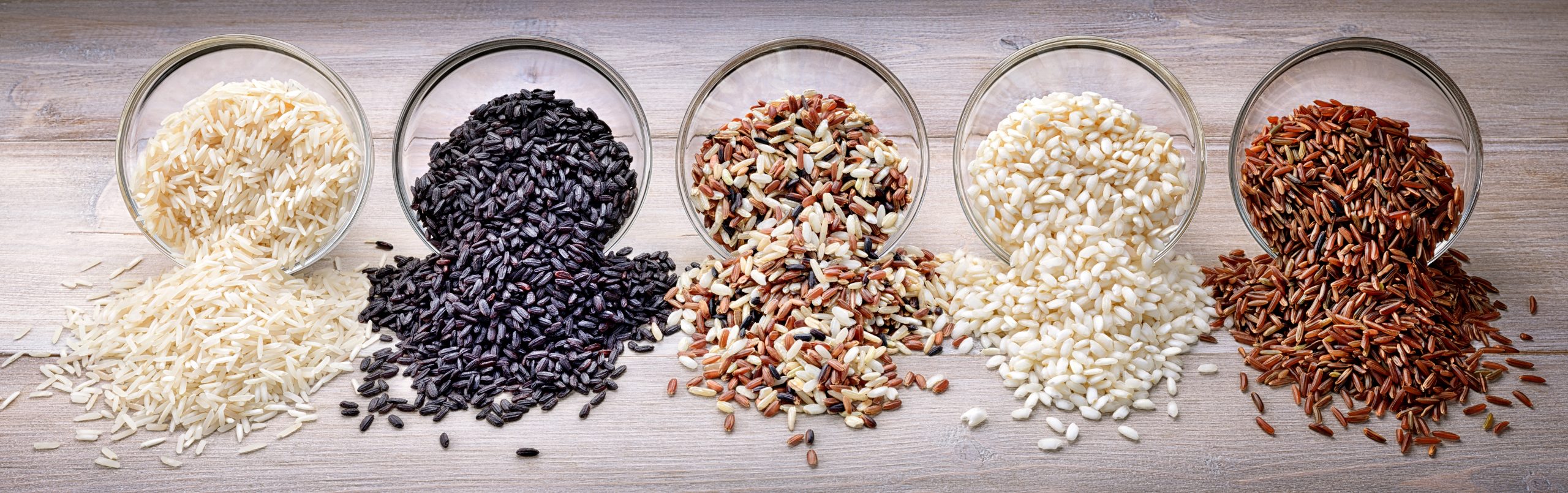
This shows the varieties of rice,(clockwise from left) Koshirikari, Indica, Black (or red), Budding Brown Rice (centre), and finally Mochi-rice.
The following is a short description of the pictured varities:
Koshirikari is one of the most popular brand names for white rice.
Indica rice is long grain, dry, and not sticky. It is best suited for fried rice.
Black (or red) rice is 50% refined, turning purple when cooked with white rice.
Brown rice is unrefined and has 3 times the vitamins, minerals and diet fiber of white rice. The popularity of macrobiotic diets these days has increased its consumption drastically.
Budding brown rice has many enzyme dissolving starches and proteins which turn into energy and amino acids.
Mochi-rice is normally steamed and cooked to make sticky rice cake (mochi).
In total there are over 250 kinds of rice, with new varieties being introduced to the market yearly. One such variety recently introduced is “Milky Queen”. Sticker than normal white rice, it is half clear with a milky color. Another is “Clean Rice”, a popular type with restaurants which doesn’t require washing or rinsing before cooking.
Some Tips Before Buying Rice
When you purchase rice, checking the polishing date is a must. Freshness is imperative!
Uncooked rice can be stored from 10-14days in the summer, one month in the spring/fall, and one and a half months in the winter.
Store in a cool and dark place in a tightly sealed container, bag, or jar. The vegetable drawers of your fridge is an ideal place. You can also add a garlic clove or hot red pepper to repel insects.
by: Norie Mori